







Introduction
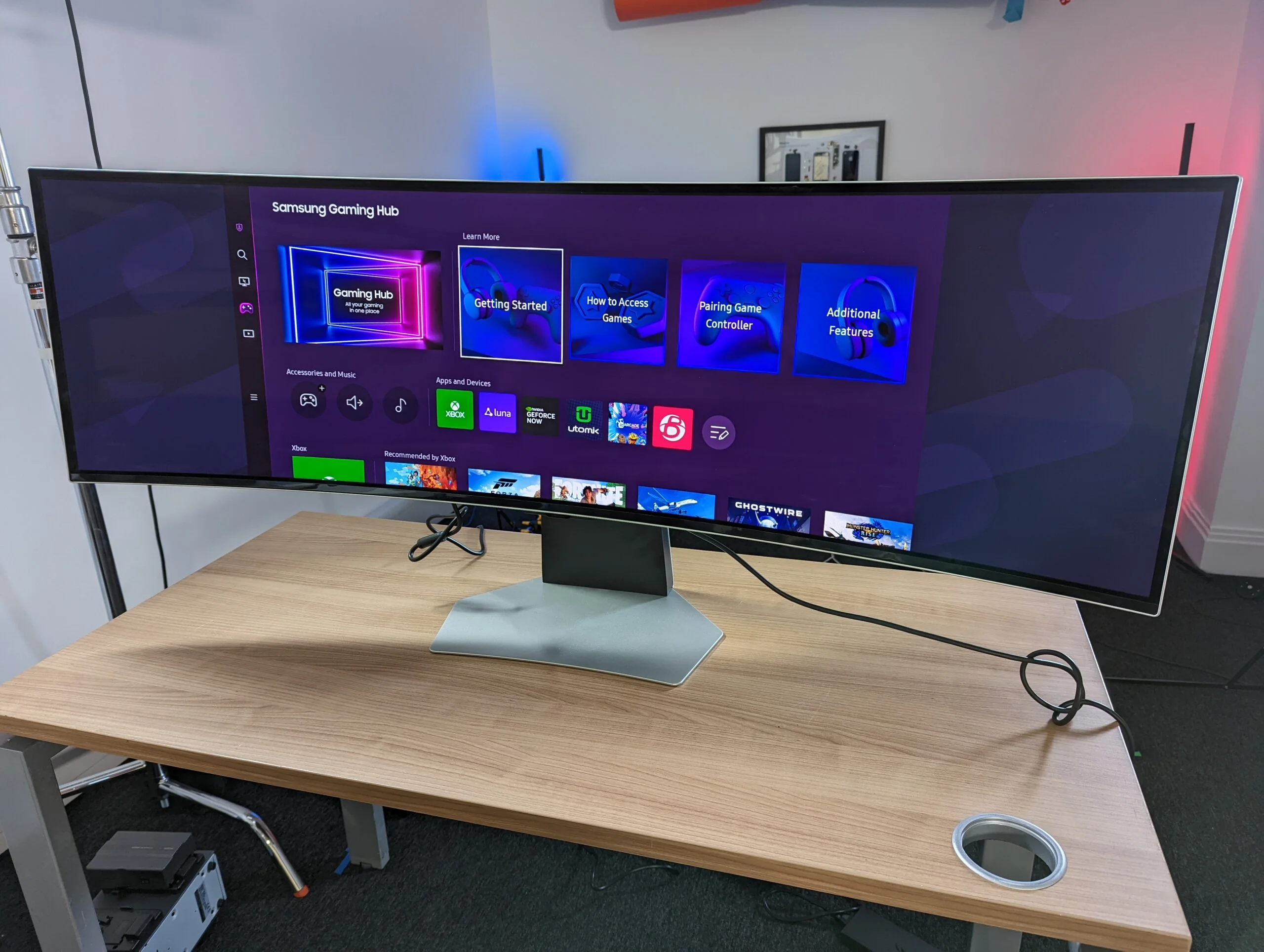
In the world of gaming, every detail matters. From the graphics to the response time, gamers are constantly seeking the best equipment to enhance their gaming experience. One such equipment that has been gaining immense popularity among gaming enthusiasts is the OLED gaming monitor. With its stunning visual quality and impressive features, the OLED gaming monitor has revolutionized the way we perceive gaming.
What is OLED?
OLED, which stands for Organic Light Emitting Diode, is a display technology that uses organic compounds to emit light when an electric current is applied. Unlike traditional LCD monitors that require backlighting, OLED pixels are self-emissive, meaning each pixel can emit its own light. This unique characteristic enables OLED displays to achieve perfect black levels, infinite contrast ratios, and vibrant colors, making them ideal for gaming.
Unparalleled Visual Quality
One of the main reasons gamers are flocking to OLED monitors is their unparalleled visual quality. With OLED’s ability to produce true blacks, every pixel can turn off completely, resulting in a contrast ratio that is unmatched by any other display technology. This means that dark scenes in games appear incredibly realistic, allowing gamers to experience a level of immersion like never before.
Moreover, OLED displays offer vibrant and accurate colors, thanks to their wide color gamut and high color accuracy. This means that games are displayed with lifelike colors, making the gaming world come alive on the screen. Whether it’s the lush greenery of a fantasy landscape or the intense red glow of a virtual battlefield, OLED monitors reproduce colors with stunning precision.
Why OLED Gaming Monitors Are a Game Changer for Players
OLED gaming monitors stand out because they combine self-lit pixel technology with lightning-fast response times and supreme contrast, delivering visuals that far exceed what conventional LCDs offer. With each pixel individually illuminated, OLED displays render perfect blacks and vibrant, rich colors — which makes dark scenes in games, cinematic environments, and shadow-heavy graphics look far more immersive and realistic. The near-instant pixel response also means motion remains crisp and smooth even during fast-paced action, significantly reducing ghosting or motion blur that can impair gameplay. For gamers and creators alike, this results in sharper detail, deeper immersion, and a fluid gaming experience that feels more like watching a high-end cinematic production than playing on a typical screen.
Factors to Consider When Choosing a Gaming Monitor
Resolution and Screen Size: The resolution of a gaming monitor determines the clarity and detail of the visuals. Higher resolutions such as 1440p (Quad HD) and 4K (Ultra HD) provide sharper images and more immersive gaming experiences, especially on larger screens. However, the choice between resolution and screen size depends on personal preference and budget constraints.
Refresh Rate and Response Time: The refresh rate of a monitor, measured in Hertz (Hz), indicates how many times per second the screen refreshes the image. A higher refresh rate (e.g., 144Hz, 240Hz) results in smoother gameplay, reducing motion blur and ghosting effects. Coupled with a low response time (measured in milliseconds), which minimizes input lag, these features are crucial for competitive gamers seeking precision and responsiveness.
TN (Twisted Nematic): Known for fast response times and low input lag, making them ideal for competitive gaming. However, TN panels typically have poorer color reproduction and viewing angles compared to other types.
IPS (In-Plane Switching): Offers superior color accuracy and wider viewing angles, making them suitable for gamers who prioritize visual quality and immersive experiences. IPS panels generally have slightly slower response times than TN panels but still perform well for gaming.
VA (Vertical Alignment): Strikes a balance between TN and IPS panels, providing good color reproduction, high contrast ratios, and decent response times. VA panels are a versatile choice for both gaming and multimedia consumption.
Lightning-Fast Response Time
In fast-paced gaming, response time is crucial. OLED monitors excel in this aspect as well. Unlike LCD monitors that suffer from motion blur due to slow pixel response times, OLED pixels can switch on and off almost instantaneously. This leads to incredibly fast response times, eliminating motion blur and ghosting effects. Gamers can enjoy smooth gameplay without any distracting artifacts, giving them a competitive edge in fast-action games.
Choosing Based on Gaming Preferences
Casual Gamers: For casual gamers who prioritize visual quality and versatility, an IPS or VA panel with a decent refresh rate (60Hz-144Hz) and 1080p or higher resolution may suffice.
Competitive Gamers: Competitive gamers benefit from high refresh rates (144Hz or higher) and low response times (1ms-5ms) offered by TN or high-performance IPS panels. Smooth gameplay and minimal input lag are critical for competitive success.
Content Creators: Content creators who also game can benefit from monitors with excellent color accuracy and wide color gamuts (e.g., Adobe RGB), typically found in high-end IPS panels. A 4K resolution monitor provides detailed visuals for video editing and gaming alike.
Enhanced Viewing Angles
Another advantage of OLED displays is their wide viewing angles. Unlike traditional LCD panels that suffer from color shift and contrast loss when viewed from different angles, OLED panels provide consistent image quality from any viewing position. This is particularly beneficial for multiplayer gaming sessions, where multiple players can enjoy the game without compromising on the visual experience.
Energy Efficiency
While OLED displays offer exceptional visual quality, they are also energy-efficient. Since OLED pixels emit their own light, there is no need for a separate backlighting system. As a result, OLED monitors consume less power compared to LCD monitors, especially when displaying predominantly dark content. This not only reduces energy consumption but also leads to thinner and lighter monitors, making them easier to transport and set up for gaming events or LAN parties.
Considerations and Future Developments
Although OLED gaming monitors offer numerous advantages, there are a few considerations to keep in mind. One of the primary concerns is the potential risk of burn-in. OLED pixels can degrade over time, especially if static images are displayed for extended periods.
Furthermore, OLED monitors are currently more expensive compared to their LCD counterparts. However, as technology advances and production processes improve, we can expect the prices to become more affordable in the future.
Conclusion
The OLED gaming monitor has undoubtedly raised the bar for gaming displays. With its stunning visual quality, lightning-fast response time, enhanced viewing angles, and energy efficiency, it provides an immersive and captivating gaming experience. As technology continues to evolve, OLED displays will likely become more accessible to gamers, allowing them to enjoy the ultimate gaming experience with vibrant colors, deep blacks, and seamless motion. So, if you’re a serious gamer looking to take your gaming sessions to the next level, investing in an OLED gaming monitor is definitely worth considering.
Apart from that if you want to know about “Helldivers 2 Best Weapons: Unleashing Devastation in the Galaxy” then please visit our “MOBILE GAMES” Category.
FAQs
OLED gaming monitors offer several advantages, including true black levels, faster response times, wider viewing angles, and better color accuracy. They are particularly favored for their ability to display HDR (High Dynamic Range) content effectively.
OLED gaming monitors generally offer superior image quality with deeper blacks, better contrast ratios, and more vivid colors compared to traditional LCD monitors. However, they may be more prone to burn-in and are typically more expensive.
Yes, OLED gaming monitors are highly regarded for gaming due to their fast response times, which minimize motion blur, and their ability to display deep blacks and vibrant colors. These features enhance the gaming experience, especially in dark scenes and HDR content.
OLED gaming monitors generally offer superior contrast, faster response times, deeper blacks, and better color accuracy, but they are typically more expensive than LED or IPS monitors.
Yes, OLED gaming monitors work very well with modern gaming consoles, especially for HDR gaming, fast response times, and smooth performance.