
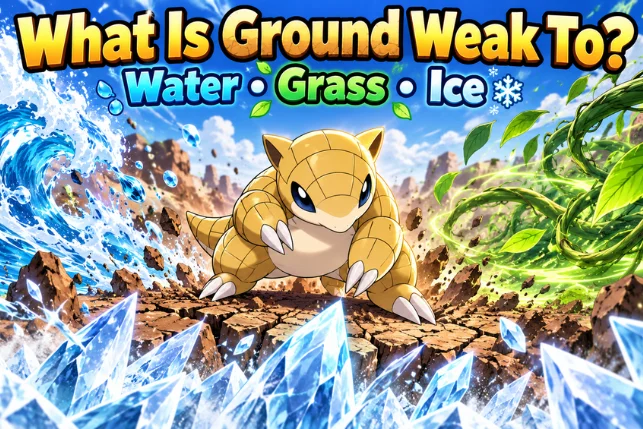
If you’re asking what is Ground weak to, the answer is Water, Grass, and Ice in the main Pokémon games. Those three attack types deal super-effective damage against a pure Ground-type Pokémon. Dual typing can change the matchup, so the opponent’s second type always matters.
Ground-type Pokémon are weak to Water, Grass, and Ice attacks in the main series. Each deals super-effective damage to a pure Ground defender. The type resists Poison and Rock, while Electric attacks normally do no damage. Dual typing can change these results, so check both types before choosing a counter.
| Battle detail | Result |
|---|---|
| Weak against | Water, Grass, Ice |
| Damage from a weakness | 2× in main-series games |
| Resists | Poison, Rock |
| Immune to | Electric |
| Attacks super effectively | Fire, Electric, Poison, Rock, Steel |
| Attacks resisted by | Bug, Grass |
| Ground moves cannot normally hit | Flying |
| Best basic counter approach | Use strong Water, Grass, or Ice attacks. |
These matchups apply to the standard video game type chart. Pokémon GO follows the same basic weakness relationships but uses its own battle calculations. The Pokémon Trading Card Game also uses a different system.
Key Takeaways
- Water, Grass, and Ice attacks are the three basic weaknesses.
- Pure Ground Pokémon take super-effective damage from all three weaknesses.
- Poison and Rock attacks deal reduced damage against this type.
- Electric attacks normally do no damage to a pure Ground Pokémon.
- Ground attacks excel against Fire, Electric, Poison, Rock, and Steel.
- Dual typing can create stronger weaknesses, remove weaknesses, or produce neutral damage.
- Pokémon GO and the Pokémon TCG should not be treated exactly like the main-series games.
What Is Ground Weak To? The Three Main Weaknesses
Water is one of the safest choices against a pure Ground opponent. Common Water attacks can exploit the matchup immediately without needing unusual battle conditions. A strong Water attacker is often a practical counter when building a general-purpose team.
Grass attacks also deal super-effective damage against this type. They become especially dangerous against Pokémon that combine Water and Ground typing. In those cases, the same Grass attack can exploit weaknesses from both defensive types.
Ice provides the third standard weakness. Ice becomes especially valuable against combinations involving Dragon, Flying, or Grass alongside the earth-based typing. Some dual-type opponents can therefore take far more damage from Ice than a pure defender would.
The established type chart appears in community encyclopedias and competitive battle databases alike. They all list Water, Grass, and Ice as the standard defensive weaknesses. That consistency makes the basic matchup easy to remember.
What Does This Type Resist?
Pure Ground Pokémon resist Poison and Rock attacks in the core games. Those moves normally deal half their regular type-effectiveness damage before other battle modifiers apply. Using them without another tactical reason usually gives your opponent an easier turn.
Electric attacks work even worse against a standard defender of this type. The matchup provides immunity, so Electric attacks normally deal no damage. This defensive trait makes earth-based Pokémon useful switch-ins against predictable Electric attacks.
These defensive properties also explain why type selection matters beyond raw attack power. A high-power move can still perform poorly against a favorable defensive matchup. Choosing an effective type often matters more than selecting the biggest displayed power number.
What Are Ground Attacks Strong Against?
Ground attacks deal super-effective damage against Fire, Electric, Poison, Rock, and Steel Pokémon. Hitting five types gives these moves broad offensive value across many teams. Earthquakes remain especially recognizable because many species can learn it.
The same attacks are not equally useful against every opponent. Grass and Bug resist standard Ground-type attacks in the core games. Flying Pokémon normally avoid them completely because the type matchup grants immunity.
Certain abilities, held items, and battle effects can also change that interaction. Levitate can provide immunity to Ground-type moves, while an Air Balloon can keep its holder above them. Effects that force a target to the ground can alter those situations.
| Ground attack versus | Effect in core games |
|---|---|
| Fire | Super effective |
| Electric | Super effective |
| Poison | Super effective |
| Rock | Super effective |
| Steel | Super effective |
| Grass | Not very effective |
| Bug | Not very effective |
| Flying | No effect normally |
Why Dual Types Can Change the Answer
A type chart gives the starting point, but dual typing combines two defensive relationships. One type may strengthen a weakness that the other type already has. Another combination can reduce or cancel a weakness instead.
Swampert is Water/Ground, and both of its types are vulnerable to Grass attacks. That makes Grass especially threatening compared with an ordinary single weakness. Quagsire and Gastrodon share the same basic defensive issue.
Garchomp combines Dragon with Ground typing. Both types are vulnerable to Ice, making Ice attacks especially dangerous against it. Torterra also has a major Ice problem because Grass and Ground both share that weakness.
Dual typing can work in the opposite direction as well. Grass resists Water, which can offset the Water weakness carried by an earth-based second type. You should therefore check both types instead of memorizing one label.
This principle also appears in other monster-battling games, though their charts differ. For example, eGamesi’s Dumud location guide discusses a Ground/Water creature within Palworld’s separate elemental system. Pokémon rules should never be copied directly into another game’s mechanics.
Best Ways to Counter Ground-Type Pokémon
Start with an attacker that has strong Water, Grass, or Ice moves. Then check whether the opponent has a second type that changes the calculation. This approach prevents a technically correct counter from becoming a poor choice against a specific species.
Speed and defensive compatibility also matter during real battles. A fragile Ice attacker may have the right move but still lose before attacking. A Water Pokémon that resists the opponent’s coverage move may provide a safer matchup.
Abilities deserve attention when choosing counters. Water Absorb, Sap Sipper, or other defensive abilities can punish an otherwise sensible attack choice on specific Pokémon. Competitive battles reward checking the full opponent rather than relying only on its displayed type.
Movesets matter for the same reason. An earth-based Pokémon can carry Rock, Steel, Fire, or other coverage moves to counter traditional threats. Your safest option combines super-effective offense with enough bulk or speed to survive that coverage.
For more matchup-focused gaming content, eGamesi’s gaming section collects current guides across several franchises. Checking game-specific rules is important because elemental systems often look similar while behaving differently. A chart from one franchise can easily create mistakes in another.
Ground Weaknesses in Pokémon GO
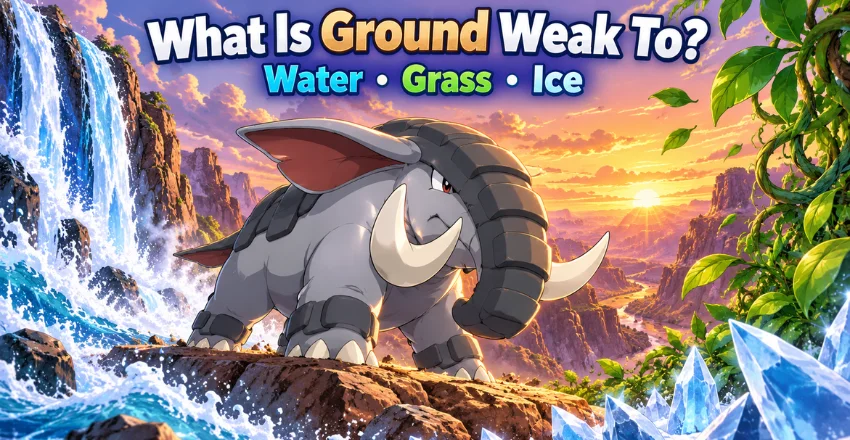
Pokémon GO keeps type effectiveness as a major part of battles. Water, Grass, and Ice remain the key attacking types when facing an ordinary defender from this category. Dual types can strengthen or weaken those relationships.
The mobile game does not copy every main-series damage rule exactly. Its battle system uses its own effectiveness calculations and treatment of immunities. Niantic’s in-game type-effectiveness information shows these differences.
The game also makes clear that dual types combine their defensive properties. This can make a Pokémon especially vulnerable when both types share the same weakness. Players should check the complete typing before selecting a raid or PvP counter.
Readers looking for more handheld and phone-focused coverage can browse eGamesi’s mobile games section. That category includes guides for games with their own character and combat systems. Always use the chart built for the game you’re currently playing.
Does the Pokémon TCG Use the Same Weakness Chart?
The Pokémon Trading Card Game should be treated separately from the video games. Its cards use a smaller set of represented types and display weakness information directly. Ground Pokémon from the games are commonly represented through Fighting-type cards.
A card’s printed weakness and resistance should guide your decision during TCG play. Do not assume every video game relationship transfers directly to the card game. Individual cards can also differ within the same broad group.
This distinction prevents a common type-chart mistake. Someone familiar with the video games may expect all three standard weaknesses to apply automatically. In the TCG, the specific card provides the relevant answer.
Easy Way to Remember the Three Weaknesses
Think about what can affect soil in everyday life. Water can soak it, plants grow through it, and ice can freeze it. That memory trick connects all three weaknesses without requiring a full chart. The comparison is only a mnemonic, not an explanation of every Pokémon design decision. Type relationships exist because of the game’s established battle system.
Still, a simple mental image can make Water, Grass, and Ice easier to recall. You can pair that memory with the defensive advantages. Earth blocks electricity in the game’s type logic, while Rock and Poison attacks are resisted. Remembering both sides makes the matchup easier during fast battles.
Frequently Asked Questions
What is Ground weak to in Pokémon?
Pure Ground-type Pokémon are weak to Water, Grass, and Ice attacks. Each is super effective under the standard core-game type chart. Dual typing can change the final damage relationship.
Is Ground weak to Electric?
No, the relationship works in the opposite direction. Pure Ground Pokémon are normally immune to Electric-type attacks in the main games. Using an Electric move against them usually produces no damage.
Is Ground weak to Fighting?
Fighting does not have a standard super-effective relationship against this type. A pure defender normally takes neutral Fighting damage before other modifiers apply. A second type can still make Fighting effective against a particular Pokémon.
What Pokémon types resist Ground attacks?
Grass and Bug resist standard attacks from this type in the core games. Flying Pokémon normally receive no damage from those moves. Abilities such as Levitate can also create immunity for certain non-Flying Pokémon.
What is the best type to use against Ground Pokémon?
Water, Grass, and Ice are the basic choices against a pure opponent. The best specific option depends on dual typing, moves, abilities, speed, and your available team. Check those factors before choosing your final counter.
Build Your Counter Around the Full Matchup
Start with Water, Grass, or Ice whenever you face a pure Ground opponent. Then inspect its second type, possible ability, and likely coverage moves. That quick check can turn a basic type advantage into a safer battle plan.
The most useful habit is treating the type chart as the first step. Pokémon battles add abilities, items, movesets, and dual typing on top of that foundation. Knowing those layers prevents avoidable mistakes against familiar opponents.
For more walkthroughs and gameplay explainers, browse the eGamesi Guides section. You can use the same process for other matchups: identify weaknesses, check exceptions, then choose a practical counter. That approach works better than memorizing a single chart without context.